
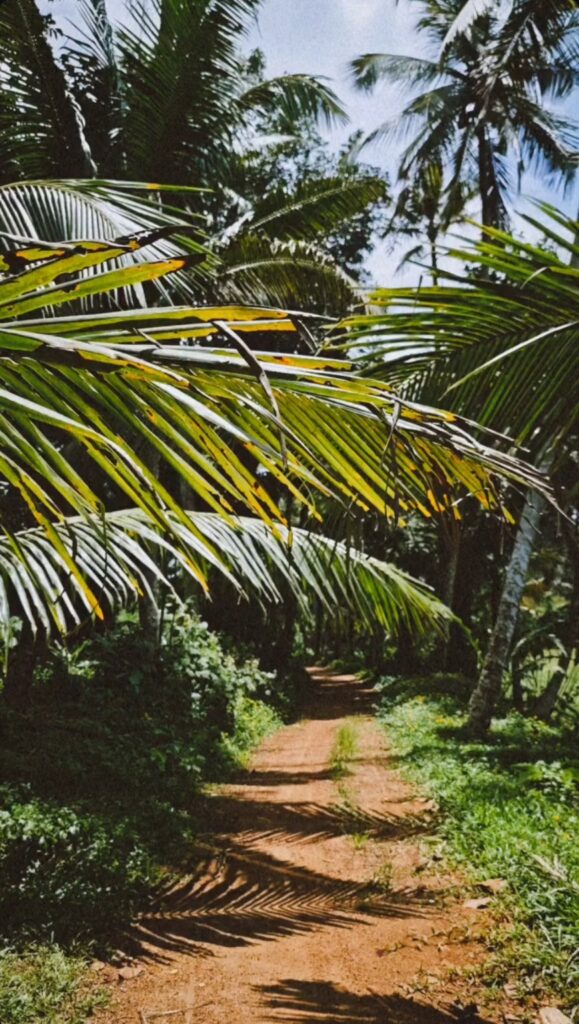
Born and raised in a lush little village teeming with trees, shrubs, and herbs—Nellimoodu—I believed that was the natural order of the Earth: a few humans, lots of trees, meandering streams, a few hens, and having rabbits and parrots for pets.
As a five-year-old, I remember playing pretend house. My cousin and I would quarrel over who got to be the “mom.” The “mom” got to do all the fun things—fashion three crimson bricks into a makeshift stove, fill split coconut shells with soil (which we imagined to be rice), and cook it, stirring continuously with a twig. The “dad” simply had to taste the cooked dishes and appreciate the exquisite cooking.
When we relocated to Mumbai, life changed in the blink of an eye. There were jungles—but only concrete ones. There were more people than birds and trees. Still blessed with the natural state of awe and wonder that only a child has, I focused on life as it was there—a new school, a gang of friends, and living together with my parents for the very first time.
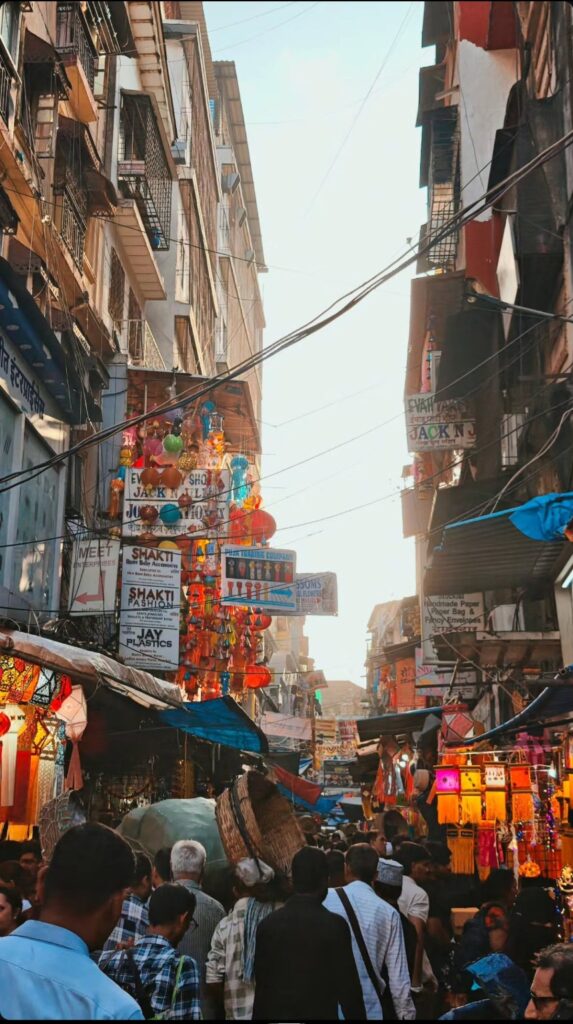
The only trees I seem to remember are the sprawling Gulmohar trees towering above us, lining the roads visible from our balcony. The fallen, wilted flowers made a fiery carpet of red, orange, and yellow along the roadside. It felt as if someone had laid them there just for me to walk through.
I knew I missed something but couldn’t quite put my finger on it. I was busy trying to prove myself in school, where kids bullied me for not speaking English and for being a bespectacled, dark-skinned Malayali girl. I was just trying to stay afloat.
It was only after spending the next twelve years in Kerala—completing high school and college—and then moving to Hyderabad to pursue my MD in Dermatology that I realized being removed from nature didn’t agree with me. There would be long stretches of dusty roads without any sign of foliage. People everywhere—taxis, auto-rickshaws, buzzing metros overhead. If it weren’t for the kind people who supported me endlessly, life would have been truly difficult.
I missed wildflowers and shrubbery, vines and palm trees.
Over the years, I’ve lived in Kalyan, Hyderabad, Bangalore, and Vellore. But “Nammude Keralam” always pulls me back, its elongated branches and creeping vines reaching into the farthest places of my heart.
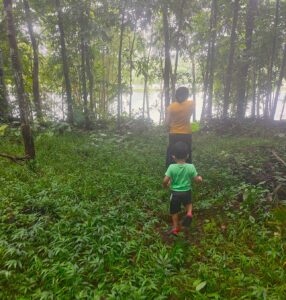
A few years ago, I came across a quote that stayed with me:
“If I had influence with the good fairy who is supposed to preside over the christening of all children, I should ask that her gift to each child in the world be a sense of wonder so indestructible that it would last throughout life…”
I hadn’t given much thought to the feelings of awe and wonder that had once come so easily to me as a child. With time, I had forgotten to stop and stare, wide-eyed, with a heart full of gratitude. I’ve been trying to remember—to notice the things that usually slip past me.
Nature therapy is supported by a growing body of evidence that suggests being outdoors—even something as simple as watching a sparrow perched on a low branch—can make you happier. Nature is an antidote to the boredom and sadness that seem to arise out of nowhere.
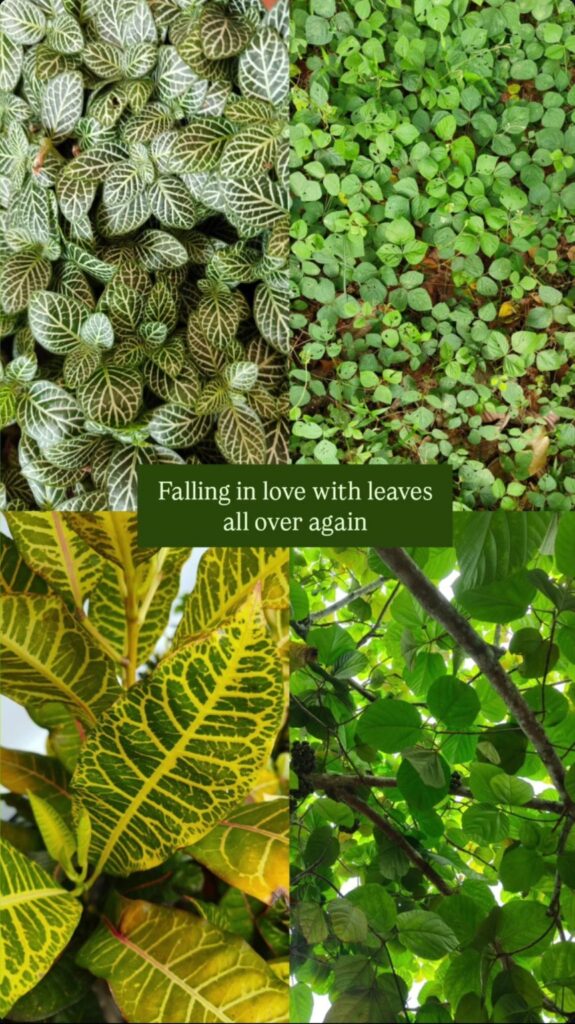
I’ve been reading novels about trees and going birdwatching. I’ve been trying to be a good plant mother to the mini succulents on my windowsill and the bicoloured bougainvillea on our balcony.
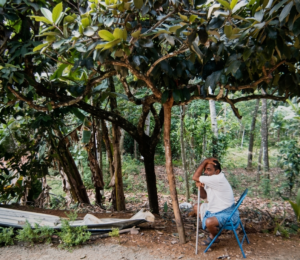
After coming across a photo of my grandfather sitting beneath the grand old mangosteen tree in the courtyard of our ancestral home, I missed my Appachachi, as I had always called him. But I also missed the mangosteen tree, which had disappeared after we all moved away.
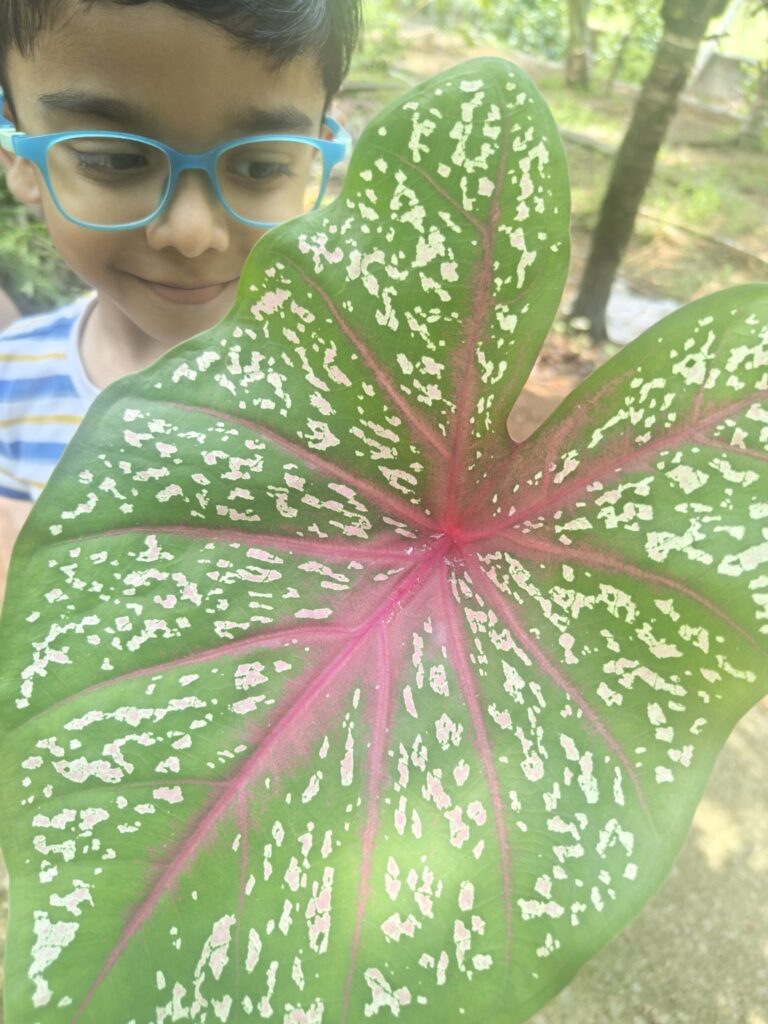
Some might find it silly—to pause and observe how shades of pink, white, and green dance in a mesmerizing pattern on a Caladium leaf, aptly nicknamed “Angel Wings.” Looking at my orange hibiscus, freshly bloomed and swaying gently in the breeze, peeking in from the balcony, fills something within me.
A mixture of reverence and gratitude.
In a world where status is often measured by the brand of car you drive or the handbag you carry, we have come to believe that having more equals being more. But maybe you aren’t as rich as you think you are. And maybe you aren’t as poor as you think you are.
Natural elements—the sun on your cheeks, the sound of a bubbling brook, a tiny yellow ladybug appearing one Sunday morning—these are riches too. Things you cannot own, but which add value precisely because they are invaluable.
The kind of conditioning we have been subjected to makes such thoughts seem absurd. It makes someone who pauses to admire a purple Lantana inflorescence seem “out of her mind.”
But reality, as I am beginning to understand, is constructed.
Maybe the point of existence isn’t just to exist.
Maybe the point is to experience.
Maybe we are the universe experiencing itself.


❤️❤️❤️